Why Container Ships Can't Wait for Green Fuel Infrastructure
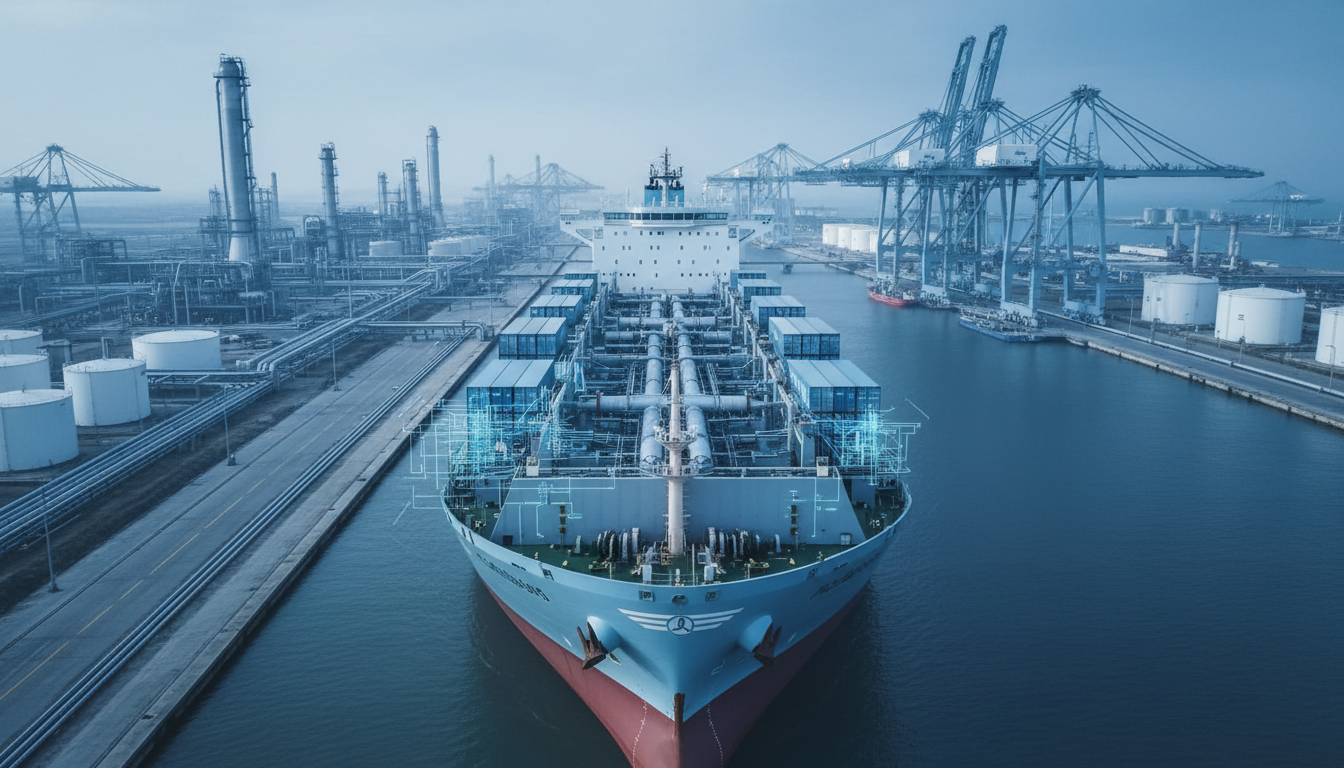
Why Container Ships Can't Wait for Green Fuel Infrastructure
The shipping industry faces a crisis that gets worse with every passing day. With the IMO's goal of zero lifecycle emissions by 2050 and requirements to reduce total annual emissions by at least 50% by 2050 compared to 2008 levels, container ship operators are trapped between regulatory compliance and economic reality.
The problem isn't technical readiness. The ships are ready, but the fuel is not. The technology exists — we have ships that can run on methanol, ammonia, and other alternative fuels. The engines are ready, the systems are in place. But this capability means nothing without accessible fuel supply chains.
The $2-3 Trillion Infrastructure Gap
Green hydrogen and ammonia infrastructure presents a staggering investment challenge. Fully decarbonizing shipping with hydrogen-based fuels would require 100-150 million tonnes of hydrogen annually, representing a $2-3 trillion investment. When combined with other hard-to-decarbonize sectors like aviation and steel, the total need is 500-600 million tonnes of hydrogen, requiring about $9 trillion.
This infrastructure simply doesn't exist today. Hydrogen bunkering infrastructure is virtually non-existent today, and large-scale production remains costly. A key hurdle in adopting ammonia as a marine fuel is the lack of global infrastructure. Unlike liquefied natural gas (LNG), which now benefits from a widespread bunkering network, ammonia fuel systems are in their infancy. There are very few ammonia bunkering terminals worldwide.
The Economic Reality of Green Fuel Cost Premiums
Waiting for green fuels means accepting devastating cost premiums that could destroy operator economics. Current price gaps are brutal:
As of early 2025, heavy fuel oil (HFO) prices ranged between 500 and 600 USD per ton, compared with green ammonia at 885 to 1,050 USD per ton. However, replacing conventional fossil fuels will require the equivalent of more than twice the amount of ammonia. In other words, green ammonia would cost between 1,900 to 2,250 USD for each ton of HFO replaced.
Methanol is itself three times more expensive than conventional ship fuels. Hydrogen is the most expensive fuel currently available, with prices ranging from $3,500 to $6,000 per ton for green hydrogen. The daily cost for a ship using hydrogen, assuming a consumption rate of 78.6 tons/day, would range from approximately $275,000 to $471,600 per day.
These aren't temporary price fluctuations. Green ammonia is currently two to three times more expensive to produce than regular ammonia. Even optimistic projections suggest policy support could help achieve price parity between green ammonia and current fossil fuels between 2030 and 2035.
The Port Infrastructure Development Timeline
Port infrastructure for alternative fuels faces a coordination nightmare. Production facilities for e-fuels need to be large-scale to be cost-effective. This creates centralized fuel hubs, but we have numerous ports worldwide that need these fuels. Distribution infrastructure becomes a massive challenge.
While some progress exists — some 120 ports, including large ones such as Rotterdam and Gothenburg, offer methanol bunkering now — the scale required is far from reality. Shipping has attracted only about $14.5 billion of an estimated $3.5 trillion in available global ESG financing.
The Fusion Alternative: Infrastructure Independence
Fusion power offers a fundamentally different approach that eliminates infrastructure dependency. Unlike green fuels that require massive port infrastructure investments and global supply chain coordination, fusion reactors operate independently of external fuel inputs.
ColdFusion Marine's containerized reactor modules are specifically engineered for existing container ship engine rooms. This retrofit compatibility means operators can achieve zero emissions without waiting for fuel infrastructure development or accepting crushing cost premiums.
While green fuel infrastructure requires 15+ years to develop and coordinate globally, fusion retrofits can begin immediately. The technology works in any port worldwide without requiring specialized bunkering infrastructure or fuel supply chain coordination.
Time Is Running Out
While the current 'exploratory phase' that the sector is in may offer benefits such as stimulating technological innovation, it can create obstacles as the sector faces increasingly shorter timelines to meet the 1.5°C target, with little deployment of relevant supply-side infrastructure. As the transition timeframe diminishes, the costs of compliance are anticipated to escalate.
Container ship operators can't afford to wait for infrastructure that may never fully materialize at acceptable costs. Every month of delay means higher compliance costs and continued exposure to volatile fossil fuel markets.
The choice is clear: wait decades for uncertain infrastructure while paying 300-500% fuel cost premiums, or retrofit with fusion power that works independently in any port worldwide at fossil fuel cost parity.
Ready to explore maritime fusion power that eliminates infrastructure dependency? Learn how ColdFusion Marine's retrofit-compatible reactor modules can future-proof your fleet at maritime-and-aviation-decarbonization-power-systems.supramono.com.
Maritime and Aviation Decarbonization Power Systems
ColdFusion Marine delivers containerized fusion reactor modules specifically engineered for deep-sea container vessels,
Discover what we're building
Learn more about Maritime and Aviation Decarbonization Power Systems and get started today.
Visit Maritime and Aviation Decarbonization Power Systems